Slippage, requotes, and execution quality
Understand why fills can differ from screen price, how order execution changes in fast markets, and what to review after each trade.
The working idea
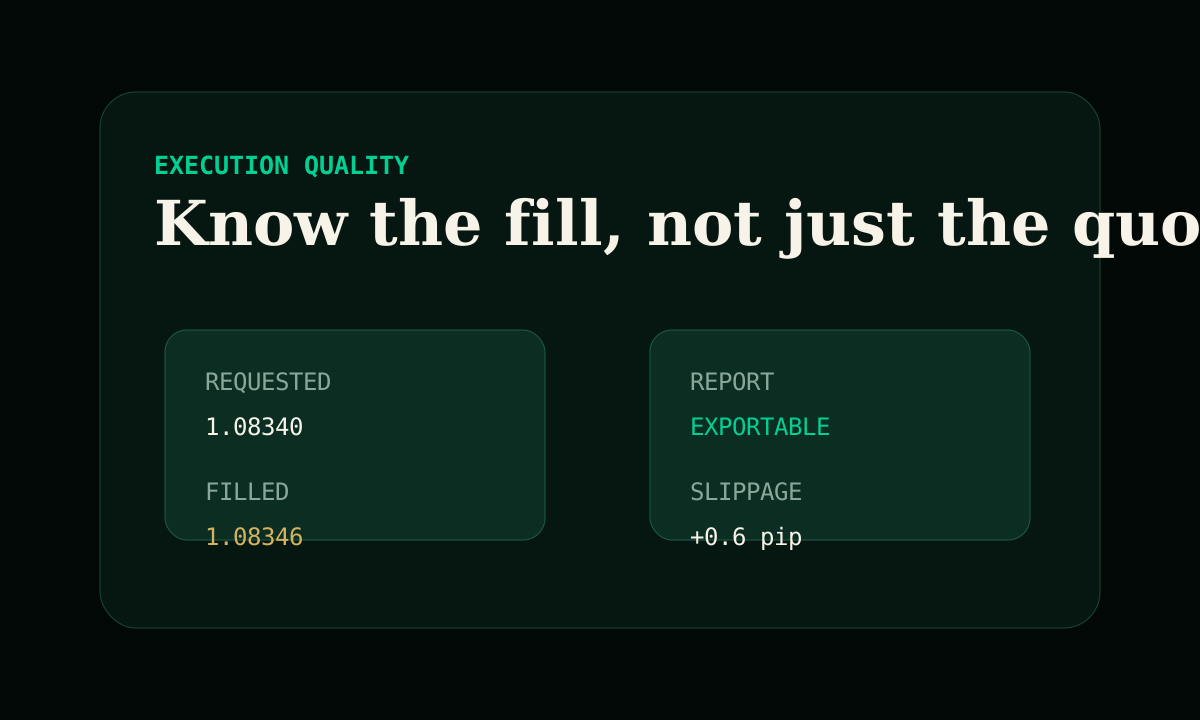
Slippage happens when the available market price changes between order submission and execution. In calm, liquid conditions the difference may be small. Around news, market open, or thin liquidity, it can widen quickly.
Slippage is not automatically a problem. The real issue is whether fills are transparent, explainable, and consistent with the market environment.
How order mode changes the trade
A requote asks the trader to accept a new price before execution. Market execution fills at the best available price without asking again, which can reduce rejection but can introduce slippage.
Neither approach removes risk. The important part is understanding the order behavior before volatility arrives, not after the fill surprises you.
Common mistake
Many traders judge execution from the one trade they remember most emotionally. That is not enough. A proper review compares requested price, filled price, timestamp, symbol, session, and market condition over many trades.
This matters because execution can look very different between liquid overlap hours and a high-impact news release.
Bullion workflow
Keep a short execution log for the symbols you trade most. Note whether slippage clusters around specific sessions, news events, or order types.
When possible, export statements and review fills in batches. Execution quality is a pattern question, not a single screenshot question.
Risk note
This article is educational and does not constitute investment advice. Trading foreign exchange, CFDs, metals, indices, and crypto derivatives involves significant risk and may not be suitable for all investors.