Support and resistance without the clutter
Use support and resistance as decision zones for location and invalidation instead of filling the chart with decorative lines.
The working idea
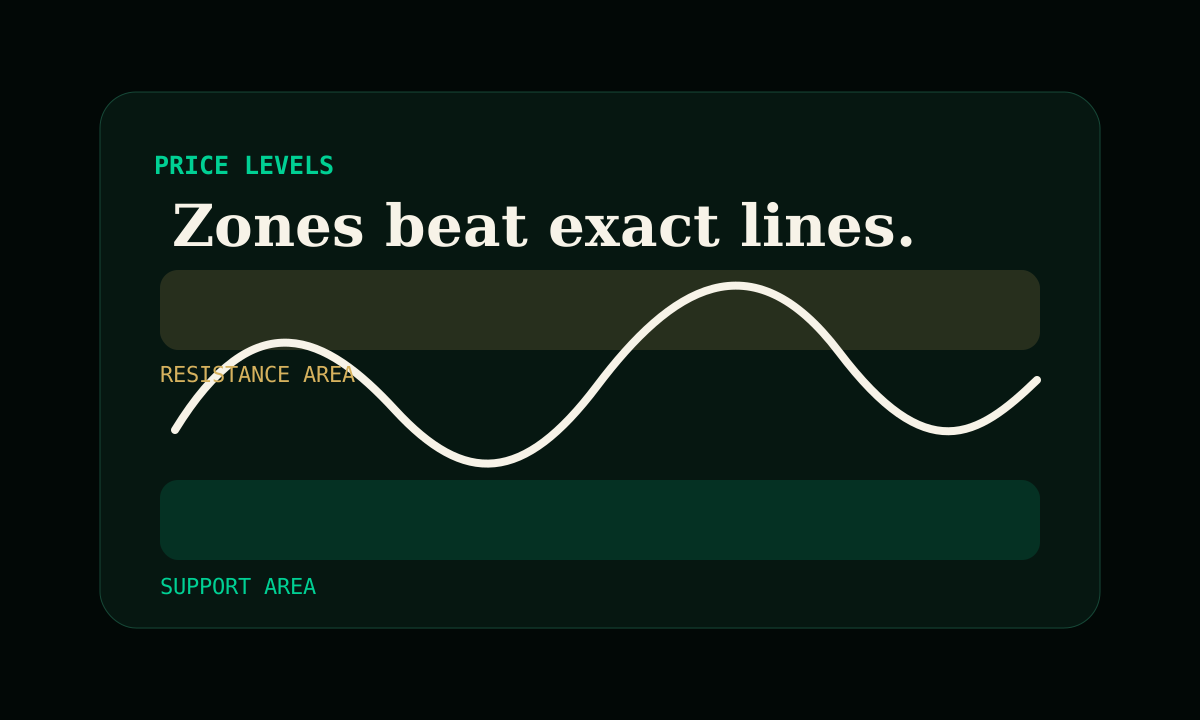
Support and resistance are areas where price has previously reacted. They are not magic lines. They are places where order flow has mattered enough to leave a visible mark.
Thinking in zones prevents false precision. Markets often probe through an exact line before deciding whether the area still matters.
How to mark levels
Start with the weekly and daily chart, then reduce the view to the session you trade. Keep only the levels close enough to affect entry, stop placement, or target selection.
If a level does not change a decision, it is probably noise. A cleaner chart usually leads to cleaner risk.
Common mistake
A chart filled with lines can justify any trade. One line supports a long, another line supports a short, and the trader ends up choosing whichever story feels best in the moment.
The fix is to decide before the trade what the level must do and where the idea becomes wrong.
Bullion workflow
Use levels to define location first and invalidation second. If the setup does not offer a clear invalidation point, reduce size or wait.
After the trade, save a chart snapshot with the original level marked. This makes later review much more honest.
Risk note
This article is educational and does not constitute investment advice. Trading foreign exchange, CFDs, metals, indices, and crypto derivatives involves significant risk and may not be suitable for all investors.